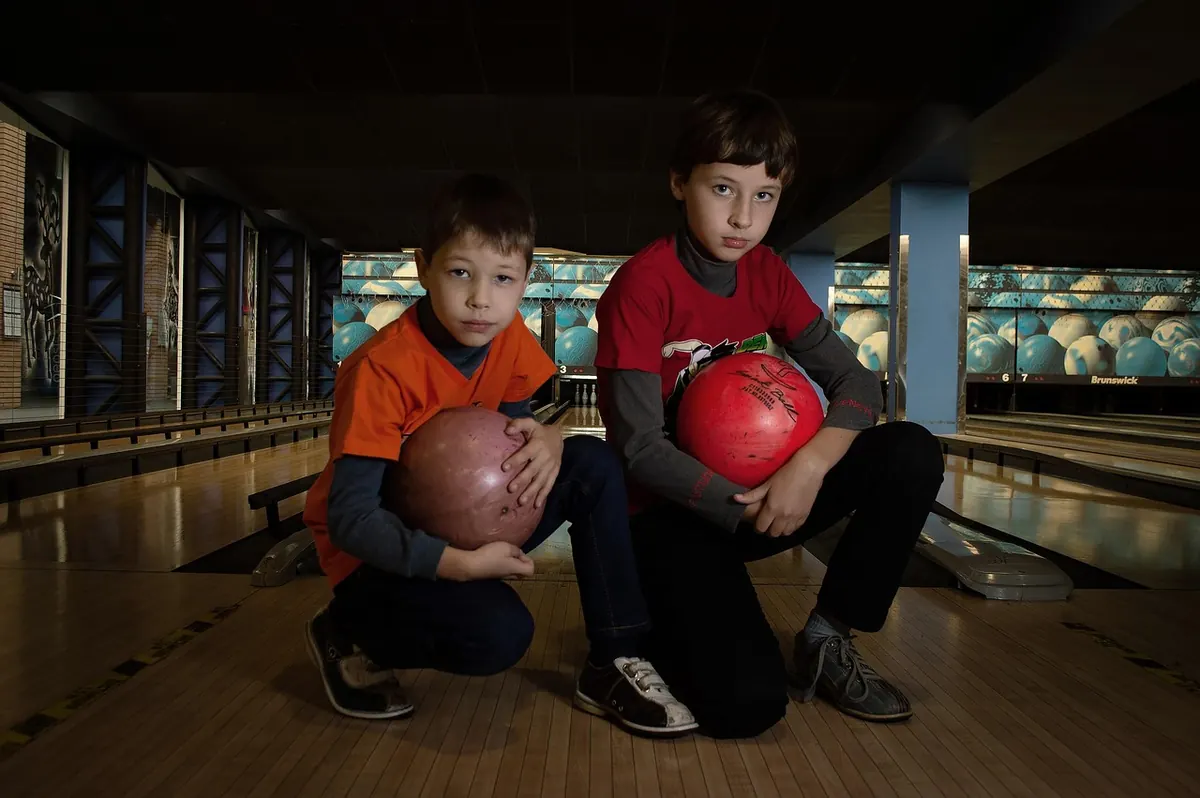
You rent shoes, pull a ball off the rack, and throw. For the first few visits, that's all you need. Somewhere between your third game and your thirtieth, though, you notice something: the ball never quite fits, and it never quite rolls the same way twice. That's when the question arrives. Do you buy your own ball, or keep using the house's?
The honest answer depends on how you bowl, not on how long you've been bowling.
What the House Ball Gets Right
Let's not be snobs about it. The house ball is one of the best deals in recreational sports: it comes with the lane rental, it requires zero commitment, and there are usually dozens to choose from in a range of weights. If you're on a date, at a birthday party, or just curious whether you'll enjoy bowling at all, renting is the correct call.
House balls are also forgiving in a specific way. Most are made of polyester, a hard, low-friction coverstock that goes fairly straight even when you put some hand into it. For a beginner still learning to hit the pocket consistently, a ball that doesn't overreact is genuinely useful. And they're ideal for shooting spares — plenty of experienced league bowlers still carry a plastic ball just for that.
Where House Balls Fall Apart
The fit is guesswork
House balls are drilled to a generic span, with finger holes sized for a wide range of hands. The result is that most people grip the ball rather than let it sit on their hand. You squeeze to keep it from falling, your thumb drags, and the release changes slightly every time. That squeeze is also a common source of hand and wrist fatigue after a few games.
If pain in your hand or wrist sticks around after you stop bowling, treat that as a signal to see a doctor or physiotherapist rather than something to bowl through. A pro shop can address the fit, but it can't diagnose an injury.
The weight is whatever's on the rack
You don't pick a house ball so much as negotiate with it. Maybe the 14-pounder has holes that fit and the 12-pounder doesn't. Beginners often end up throwing something too heavy because the span felt better, or too light because it was the only ball their fingers didn't stick in.
Nothing is repeatable
Different ball, different weight, different surface, different holes — sometimes in the same game. When the equipment changes, you can't tell whether you made a good adjustment or just picked up a different rock. Learning requires a consistent variable, and the rack doesn't provide one.
What Actually Changes With Your Own Ball
A custom ball is drilled to measurements taken from your hand: span, thumb size, finger size, and the pitches of each hole. In plain terms, the ball hangs on your hand instead of being held by it. You can relax your grip, which usually means a smoother, more repeatable release.
You also choose the weight deliberately. A common guideline for beginners is to throw the heaviest ball you can swing freely without feeling like you have to squeeze — and that's a judgment a pro shop can help you make in person, not something to guess from a chart.
Then there's the coverstock:
- Polyester (plastic): goes fairly straight, excellent for spares, a sensible first ball for someone who mostly throws straight.
- Entry-level reactive: grips the lane and curves, but in a controlled way. This is the usual starting point for beginners who want to learn to hook the ball.
What you're really buying is consistency. Same ball, same fit, same reaction, week after week. That's what lets you figure out cause and effect: I changed my speed, the ball went high; I moved two boards right, it came back to the pocket.
The Money Question
Comparing the two isn't quite fair, because the house ball is effectively free and the custom ball isn't. But the relevant comparison isn't "free versus expensive" — it's "the cost of one ball versus the cost of a hobby you've already decided to keep."
When you price out your first ball, remember that drilling is often quoted separately from the ball itself, and finger inserts or a thumb slug may be extra. Ask the pro shop for a total, not a ball price. A few other ways to keep the first purchase reasonable:
- Buy one ball, not three. A bag full of equipment won't help you while you're still learning to repeat a shot.
- Ask about used balls the shop has redrilled. A quality used ball fitted properly beats a new ball fitted badly.
- Skip the spare ball and the aggressive high-performance ball for now. Neither helps a beginner.
- If you're buying secondhand online, have a pro shop inspect it for cracking or plugged holes before you commit to drilling.
Bowling shoes are worth mentioning here, since they're usually a smaller purchase than a ball and can make a bigger difference to your consistency. You can't slide in rental shoes the same way twice.
A Simple Rule for When to Buy
Buy your own ball when at least two of these are true:
- You bowl more than once a month, or you plan to join a league.
- You keep grabbing the same weight because it's the only one that fits, not because it's right.
- Your hand gets tired or sore during a session.
- You want to learn to hook the ball and the plastic house ball keeps skidding straight.
- You're frustrated that your results change when nothing about your approach changed.
Wait if you've only bowled a handful of times, you're still deciding whether the sport is for you, or you haven't yet tried a properly fitted ball. There's no prize for buying early.
Make the First Purchase Count
Get measured in person, even if you order the ball online afterward. Ask the pro shop what they'd recommend for a beginner on your local lane conditions — house oil patterns vary, and a ball that hooks nicely at one center can be a knuckleball at another. If you're torn between a conventional grip and a fingertip grip, ask the pro to explain the trade-off for your hand and your goals; fingertip lifts the ball's potential but takes an adjustment period.
Then take it to the lanes and bowl. Not a league night, not a tournament — just a few games where you throw the same ball, from the same spot, and pay attention to what changes when you change something. That's the part the house ball could never give you.
Photo: Sunriseforever / Pixabay